


Kitchen Interior Design Service with Sustainable Materials

Sustainability used to be a niche request in kitchen renovations. It isn't anymore. According to Houzz's national kitchen trends research, 92 percent of homeowners now include at least one sustainable feature in a kitchen renovation, and long-run cost effectiveness, not just environmental concern, is the leading reason why. A Kitchen Interior Design Service built around sustainable materials isn't a trend layer on top of good design anymore. For most homeowners, it's simply part of what good design means now.
This guide covers what sustainable kitchen materials actually cost compared to standard options, which ones hold up best over time, and how The Interiorful approaches this kind of project for homeowners across California.

Why Sustainable Materials Are Reshaping Kitchen Interior Design Service Requests
The shift toward sustainable kitchens isn't driven purely by environmental values, even though that matters to a majority of homeowners too. Long-run cost effectiveness is the reason most often cited for choosing sustainable materials, ahead of environmental friendliness itself. Materials like reclaimed wood and recycled glass surfaces tend to be more durable and lower maintenance over time, which offsets a higher upfront cost for many households.
This matters across every buyer type. New home buyers inheriting a dated kitchen often want a healthier space with better indoor air quality, since low-VOC paints and finishes reduce off-gassing compared to conventional options. Property investors care about durability and appeal to future buyers. Luxury homeowners increasingly expect sustainable materials as a baseline expectation, not an add-on. A properly planned Kitchen Design approach accounts for all of this from the first layout sketch rather than retrofitting sustainability onto a finished plan.
What a Kitchen Interior Design Service with Sustainable Materials Actually Includes
A full sustainable kitchen project through The Interiorful typically covers:
Space Planning that reduces material waste by working with the existing footprint where possible
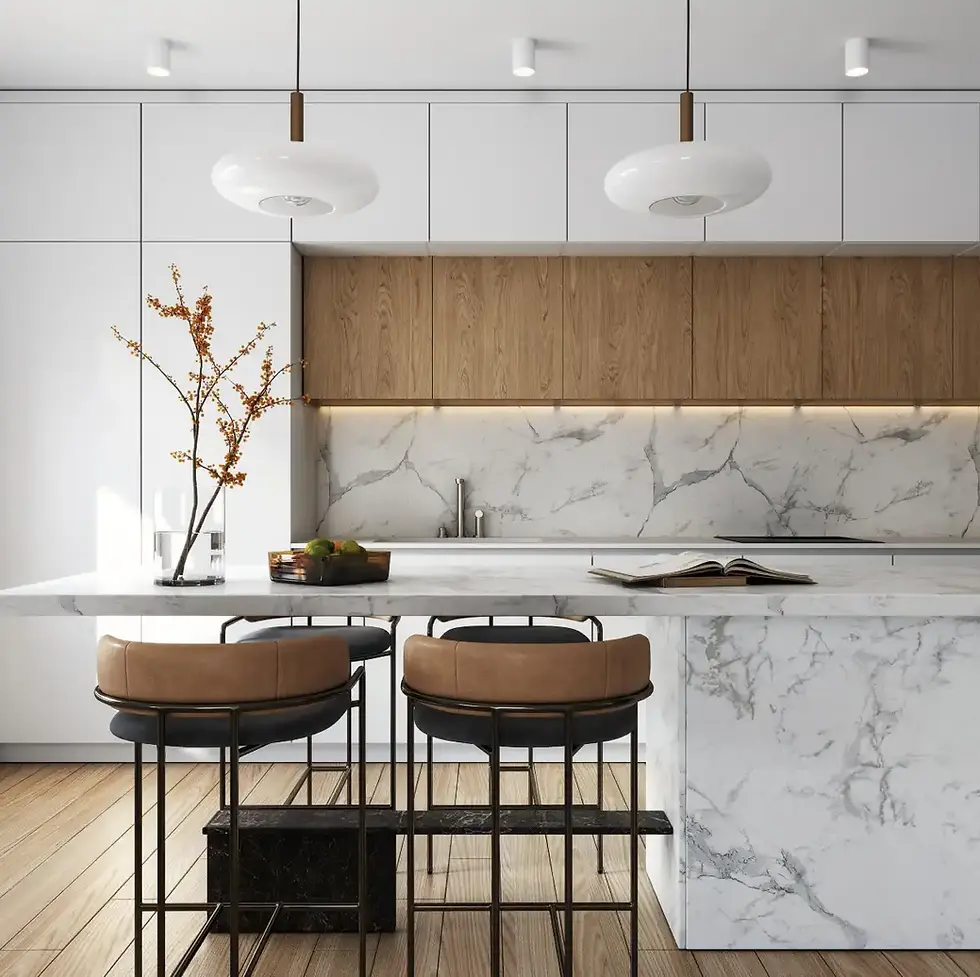
Cabinetry sourced from reclaimed wood, sustainably harvested timber, or bamboo
Countertop selection from recycled glass, recycled quartz, or composite stone surfaces
Low-VOC paints and finishes throughout the space
Energy-efficient appliance specification and lighting design
Water-efficient fixtures for sinks and dishwashers
Custom Design detailing that keeps the finished kitchen consistent with the rest of the home's Residential Interior Design
Because sustainability touches almost every material decision in a kitchen, it works best as a consideration built into the original design brief, rather than a swap made after cabinetry and countertops are already chosen.
Indoor Air Quality as an Underrated Benefit
Conventional cabinetry and particleboard finishes can off-gas volatile organic compounds for months after installation. Low-VOC paints, finishes, and adhesives address this directly, and it's often the benefit homeowners notice fastest, well before they think about the material's environmental sourcing.
Sustainable Kitchen Materials: What They Cost Compared to Standard Options
Cost is the first practical question for most homeowners considering sustainable materials. The table below reflects typical price differences compared to conventional equivalents.
Material | Sustainable Option | Typical Cost vs Standard |
Countertops | Recycled glass, Dekton composite | 30% to 40% more than standard stone counters |
Cabinetry | Reclaimed wood | 30% to 50% more than new virgin wood, due to labour |
Flooring | Cork | $4 to $8 per square foot, comparable to porcelain tile |
Paint and finishes | Low-VOC options | Minimal to no premium over standard paint |
Insight: Not every sustainable material carries a cost premium, and this is often the most surprising fact for homeowners starting a Kitchen Interior Design Service conversation. Cork flooring and low-VOC paint price out close to standard options, while reclaimed wood cabinetry costs more upfront because of labour intensive sourcing and preparation. Mixing sustainable and standard materials strategically, rather than choosing one approach for the whole kitchen, is often the most budget-efficient way to go green.

Why Homeowners Are Choosing Sustainable Kitchens: The Real Numbers
Kitchen renovation spending has climbed steadily, and sustainability has become part of that investment rather than a separate cost.
Metric | Figure |
Homeowners including sustainable features | 92% |
Homeowners citing long-run cost-effectiveness as the top reason | 74% |
Homeowners citing environmental friendliness as top of mind | 54% |
Homeowners choosing a timeless design as a sustainable choice | 47% |
Chart: U.S. Median Kitchen Remodel Spend, Minor Renovations
Mid-2020    ████████████                $8,000
Mid-2021    ████████████████            $10,000
Mid-2022    ███████████████████████     $14,000
Spending on kitchen renovations has grown significantly over recent years, and sustainable material choices are increasingly built into that budget from the start rather than added as an afterthought once the main renovation is planned.

Balancing Sustainability with Luxury and Long-Term Value
Sustainable doesn't have to mean minimal or budget. Reclaimed wood cabinetry, natural stone composites, and recycled glass surfaces can read as high-end finishes, particularly when paired with the kind of Home Styling and furnishing that ties a kitchen into the rest of the house. Luxury homeowners in particular are finding that sustainable materials, rather than working against a premium look, often add texture and character that standard manufactured finishes can't replicate.
For property investors, durability matters as much as appearance. Bamboo and reclaimed wood cabinetry, recycled composite countertops, and cork flooring all hold up well under regular use, which reduces maintenance costs over a rental property's lifespan compared to lower-grade conventional materials chosen purely to minimize upfront spend.
Choosing the Right Residential Interior Designer for a Sustainable Kitchen
Not every designer sources sustainable materials the same way. A few questions help homeowners find the right fit:
Do they have existing relationships with sustainable material suppliers, or would sourcing start from scratch? Established supplier relationships usually mean better pricing and fewer delays.
Can they show real cost comparisons between sustainable and standard options for this specific kitchen? A designer should quantify the trade-offs, not just recommend materials generally.
Do they understand which sustainable materials suit a working kitchen's daily wear? Not every eco-friendly material performs equally well under heavy use.
Will the sustainable material choices integrate with the rest of the home's Interior Design, or feel disconnected? Consistency across rooms matters as much in a kitchen project as it does in a full home makeover.
Do they offer full Interior Solutions, from design through installation and styling? A single point of coordination avoids mismatched expectations between design intent and finished materials.
The Interiorful works with homeowners across California to plan Kitchen Design projects that incorporate sustainable materials without sacrificing function or style, drawing on the same residential interior design ideas process used across Bathroom Design, full home remodels, and custom furnishing work.
FAQs
How much more does a sustainable kitchen cost compared to a standard renovation? Cost varies by material choice, with some options like cork flooring and low-VOC paint costing close to standard equivalents, while reclaimed wood cabinetry and recycled composite countertops can run 30 to 50 percent more than conventional versions. Mixing sustainable and standard materials strategically helps manage overall budget.
What are the most popular sustainable materials for kitchens?
Reclaimed wood cabinetry, recycled glass or composite countertops, bamboo, cork flooring, and low-VOC paints are among the most commonly chosen sustainable kitchen materials. Energy-efficient appliances and water-efficient fixtures are also frequently included as part of a sustainable kitchen renovation.
Is a sustainable kitchen renovation worth the extra cost?
For many homeowners, yes, since sustainable materials are often more durable and lower maintenance over time, offsetting the higher upfront cost. Long-run cost effectiveness is the most commonly cited reason homeowners choose sustainable materials, ahead of environmental considerations alone.
Can a sustainable kitchen still look luxurious?
Yes, sustainable materials like reclaimed wood and recycled glass surfaces are increasingly used in high-end kitchen design, adding texture and character that manufactured finishes often lack. Sustainability and a premium finished look aren't mutually exclusive with the right material selection.
What should I ask a kitchen designer about sustainable materials?
Ask whether they have existing supplier relationships for sustainable materials, whether they can compare costs against standard options for your specific kitchen, and whether the materials chosen will hold up under daily use. A designer should be able to explain trade-offs clearly rather than recommending sustainability in general terms.
Plan a Kitchen That's Sustainable and Built to Last
A sustainable kitchen works best when material choices are planned as part of the original design, not layered on after the fact. The Interiorful helps homeowners balance sustainability, durability, and style across a full Kitchen Interior Design Service, from initial layout through final Home Styling.
The Interiorful Phone: (949) 899-0099 Website: theinteriorful.com


