


How to Mix & Match Furniture Styles Like a Pro?

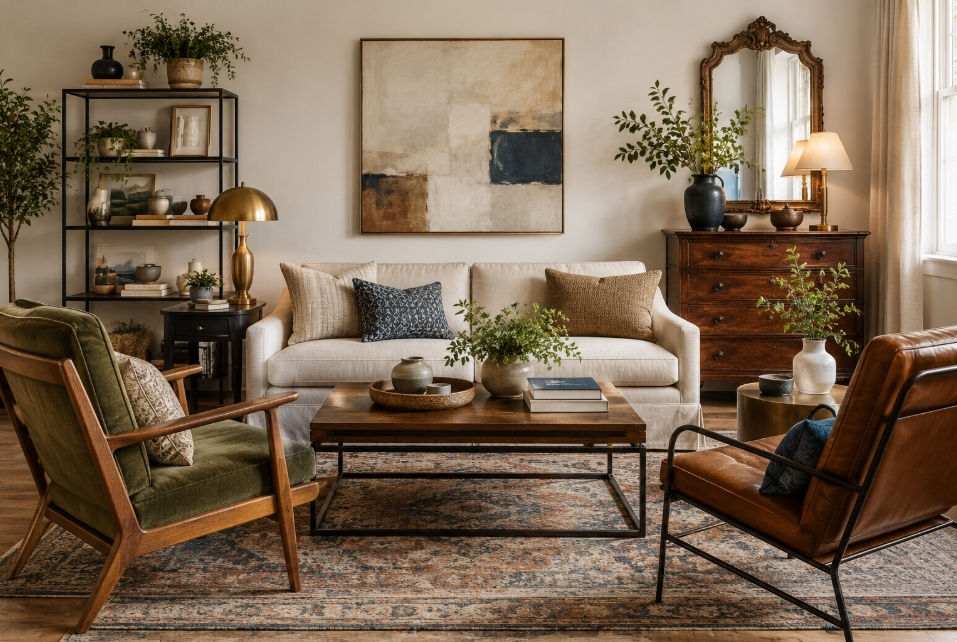
Mixing furniture styles has become one of the most popular interior design approaches across the USA. Homeowners are moving away from purchasing matching furniture sets and instead creating spaces that reflect personality, comfort, and individuality. The challenge is making different pieces work together without creating a room that feels cluttered or disconnected. A modern sofa can look stunning beside a vintage coffee table, while rustic wood furniture may complement sleek contemporary accents. The secret lies in balance, consistency, and thoughtful planning.
This guide covers practical techniques used by professional designers to blend furniture styles successfully, helping you create interiors styled with furniture that feel cohesive, stylish, and timeless.
Why Mixing Furniture Styles Works So Well
A home filled with one furniture style can sometimes feel predictable. Combining styles adds character and visual interest.
Benefits include:
More personalized interiors
Greater decorating flexibility
Easier furniture upgrades over time
Better use of inherited or vintage pieces
A unique design that stands apart from showroom displays
Today's homeowners often blend traditional, modern, industrial, farmhouse, Scandinavian, and mid-century elements to create spaces that feel curated rather than purchased all at once.
Understanding Popular Furniture Styles
Before combining pieces, it's important to recognize the characteristics of major furniture styles.
Furniture Style Comparison Table
Furniture Style | Key Features | Common Materials | Best Pairing Options |
Modern | Clean lines, minimal details | Glass, metal, polished wood | Industrial, Scandinavian |
Traditional | Ornate details, rich finishes | Dark wood, leather | Transitional, modern |
Farmhouse | Rustic charm, natural textures | Reclaimed wood | Modern, industrial |
Mid-Century Modern | Tapered legs, simple forms | Walnut, teak | Modern, Scandinavian |
Industrial | Raw finishes, exposed materials | Metal, concrete | Modern, farmhouse |
Scandinavian | Light colors, functionality | Oak, linen | Modern, mid-century |
Knowing these characteristics makes it easier to identify pieces that can complement one another.
Start With One Dominant Style
One common mistake is giving equal weight to several styles.
Professional designers typically select one primary style that represents about 70% of the room and use secondary styles for the remaining 30%.
For example:
70% Modern
20% Farmhouse
10% Industrial
This method creates structure while still allowing personality.
Example Style Ratio
Primary Style | Secondary Style | Accent Style |
Modern | Farmhouse | Industrial |
Traditional | Contemporary | Mid-Century |
Scandinavian | Modern | Rustic |
Industrial | Modern | Vintage |
A dominant style acts as the visual foundation that keeps the room organized.
Use Color to Create Harmony
Color is often more important than style when mixing furniture.
Even furniture from completely different design eras can work together if they share a coordinated color palette.
Consider these approaches:
Neutral Foundation
Use:
White
Beige
Gray
Taupe
Cream
These shades help connect different furniture styles naturally.
Repeat Accent Colors
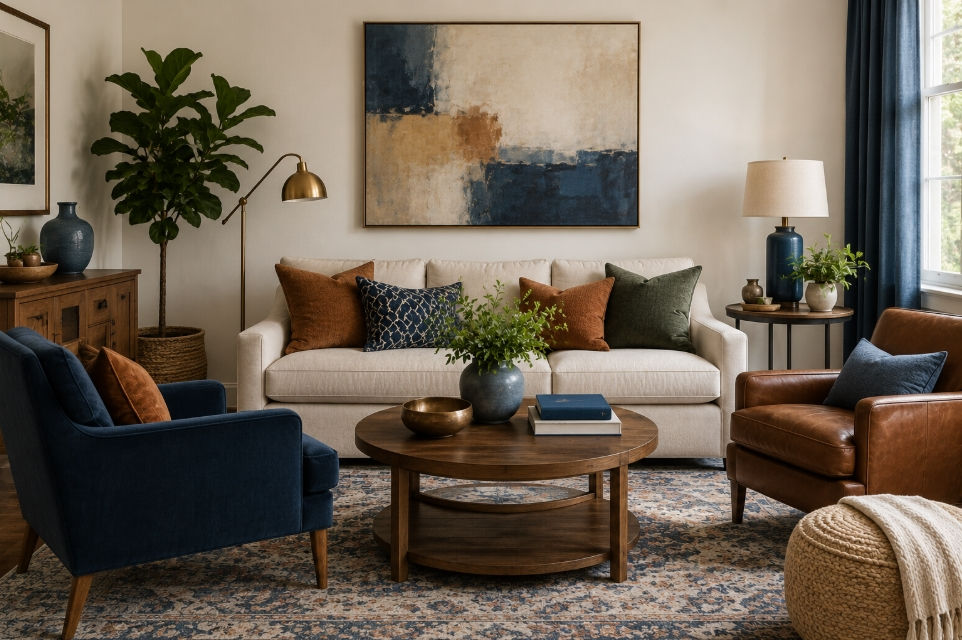
If a navy-blue accent chair appears in one area, repeat navy blue through:
Pillows
Artwork
Rugs
Decorative accessories
Repeating colors creates visual consistency across the room.
Limit Major Colors
Most designers stick to:
One dominant color
One secondary color
One accent color
This prevents furniture combinations from appearing chaotic.
Blend Shapes and Materials Thoughtfully
Successful interiors styled with furniture often combine contrasting materials.
Examples include:
Wood + Metal
Leather + Linen
Marble + Wood
Glass + Brass
The contrast adds depth and sophistication.
Effective Material Combinations
Material 1 | Material 2 | Result |
Walnut Wood | Black Steel | Modern Industrial |
Linen | Reclaimed Wood | Farmhouse Comfort |
Marble | Brass | Luxury Contemporary |
Leather | Oak | Transitional Elegance |
Glass | Wood | Balanced Modern Design |
Instead of matching every finish, focus on creating complementary relationships.
Create Visual Balance Across the Room
Balance matters more than matching.
A large traditional dining table can coexist with contemporary chairs if visual weight is evenly distributed.
Think about:
Furniture size
Color intensity
Texture
Shape
For example:
A heavy dark wood cabinet may need lighter furniture nearby to prevent the room from feeling unbalanced.
Professional designers often step back and view the entire room rather than focusing on individual pieces.
Furniture Makeovers Can Bridge Different Styles
Furniture makeovers offer a practical solution for blending styles.
Instead of replacing quality furniture, many homeowners update existing pieces.
Popular makeover ideas include:
Painting
Transform:
Traditional dressers into modern statement pieces
Vintage cabinets into contemporary storage
Hardware Replacement
Changing knobs and handles can instantly alter furniture style.
Examples:
Brass hardware for a luxury appearance
Matte black hardware for a modern look
Reupholstery
New fabrics can completely change how furniture fits within a room.
A traditional chair upholstered in a modern fabric often becomes a perfect transitional piece.
Furniture makeovers help homeowners save money while creating a more cohesive design.
Use Custom Furniture for Difficult Spaces
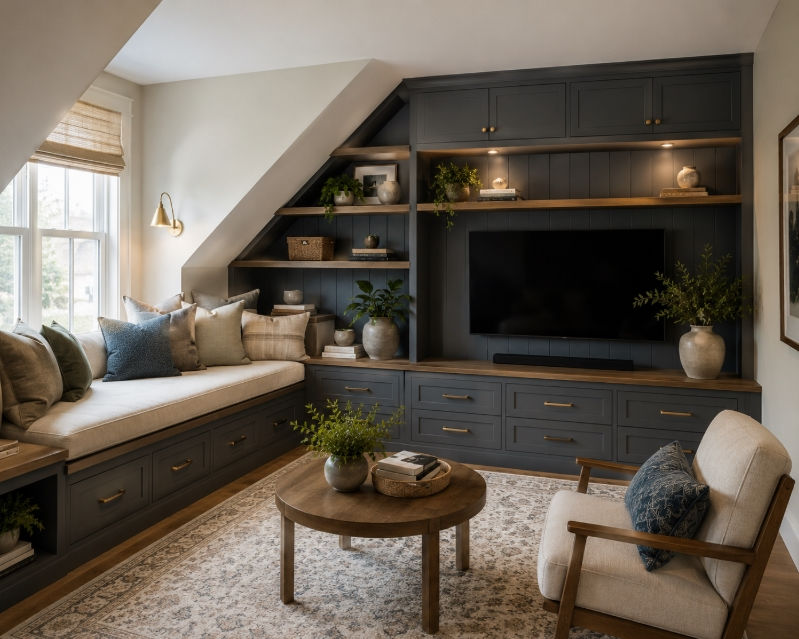
Custom furniture is growing in popularity throughout the USA because it solves design challenges while helping homeowners blend multiple styles.
Benefits include:
Perfect sizing
Material flexibility
Personalized finishes
Better space utilization
For example:
A homeowner may combine a farmhouse dining table with custom modern benches designed specifically for the room.
Custom furniture allows designers to create "bridge pieces" that connect contrasting styles naturally.
This approach is especially useful in:
Open floor plans
Small apartments
Luxury homes
Historic properties
Furniture Trends Influencing Mixed-Style Interiors
Current furniture trends strongly support mixing styles.
Instead of strict design rules, today's interiors prioritize comfort and individuality.
Leading Furniture Trends in the USA
Curved furniture silhouettes
Sustainable materials
Vintage-modern combinations
Natural wood finishes
Mixed metals
Textured upholstery
Handmade custom furniture
These trends encourage creative combinations rather than perfectly matched collections.
Furniture Trend Popularity Chart
Trend | Popularity Score (%) |
Sustainable Furniture | 92 |
Custom Furniture | 89 |
Mixed Materials | 85 |
Vintage + Modern Mix | 83 |
Curved Furniture | 79 |
Neutral Interiors | 74 |
Industrial Accents | 68 |
Insight: Homes that combine modern furniture with vintage or handcrafted pieces often feel more authentic and memorable than rooms furnished entirely from a single collection. Designers increasingly prioritize personality over strict style conformity.
Room-by-Room Style Mixing Tips
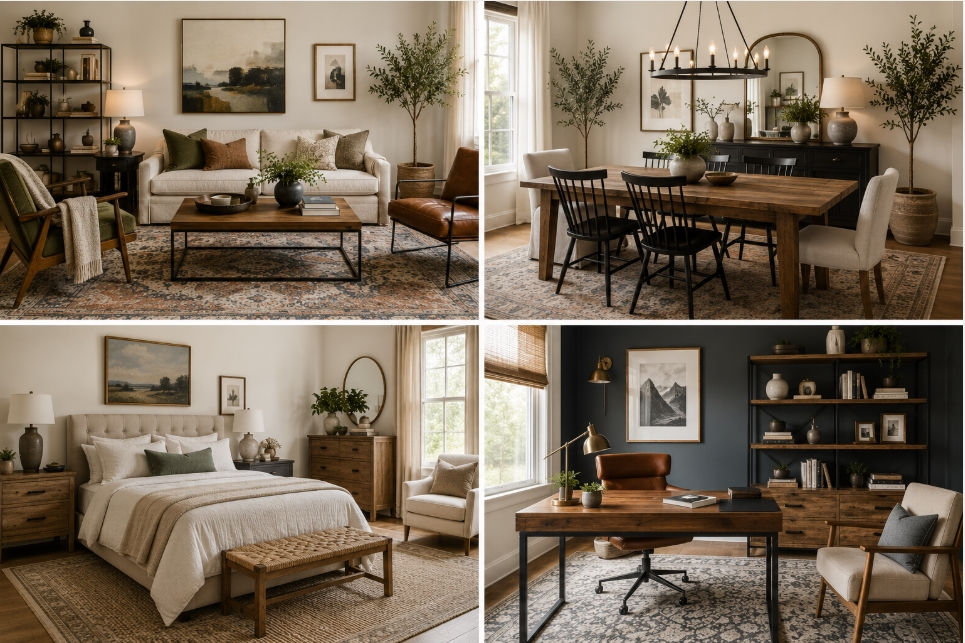
Living Room
Combine:
Modern sofa
Vintage coffee table
Contemporary lighting
Maintain a consistent color palette.
Dining Room
Pair:
Traditional dining table
Modern dining chairs
This combination remains one of the most popular designer-approved solutions.
Bedroom
Blend:
Upholstered headboard
Rustic nightstands
Minimalist lighting
The result feels warm yet refined.
Home Office
Mix:
Contemporary desk
Vintage bookshelf
Industrial task lighting
This creates character while maintaining functionality.
Common Mistakes to Avoid
Mixing Too Many Styles
Limit combinations to two or three primary influences.
Ignoring Scale
Furniture should relate proportionally to the room and surrounding pieces.
Matching Everything
Perfect matching often feels less interesting than thoughtful coordination.
Forgetting Texture
Texture adds depth and helps different styles feel connected.
Following Trends Too Closely
Choose furniture you genuinely enjoy rather than chasing every new trend.
Final Thoughts
Mixing furniture styles successfully requires balance, consistency, and confidence. Start with a dominant style, establish a clear color palette, blend materials carefully, and focus on overall harmony rather than perfect matching. Furniture makeovers can refresh existing pieces, while custom furniture offers tailored solutions for challenging spaces. By combining classic design principles with current furniture trends, homeowners can create interiors styled with furniture that feel personal, functional, and visually appealing. The most impressive rooms rarely follow a single design rule. Instead, they tell a story through carefully selected pieces that work together to create a home filled with character and comfort.
Frequently Asked Questions:
1. Can you mix different furniture styles in the same room?
Yes. Mixing furniture styles is a common interior design strategy. The key is maintaining consistency through color, scale, materials, and proportion. Most designers recommend selecting one dominant style and using one or two complementary styles to create balance without making the room feel cluttered or disconnected.
2. What furniture styles work best together?
Modern and farmhouse, industrial and contemporary, Scandinavian and mid-century modern, and traditional with transitional styles are among the most successful combinations. These pairings work because they share similar proportions, materials, or color palettes that help create visual harmony throughout a room.
3. How do you make mismatched furniture look cohesive?
Use a consistent color palette, repeat materials throughout the space, and balance visual weight. Area rugs, lighting, artwork, and decorative accessories can connect different furniture pieces and create a unified appearance while preserving the unique character of each style.
4. Is custom furniture worth it for mixed-style interiors?
Custom furniture can be extremely valuable because it helps bridge design gaps between different styles. Homeowners can select dimensions, finishes, fabrics, and materials that complement existing furniture while solving specific layout or storage challenges within a room.
5. Are matching furniture sets still in style?
Matching furniture sets remain available but are less popular than personalized design approaches. Current furniture trends favor curated interiors that combine multiple influences, vintage pieces, custom furniture, and unique accents. This creates a more authentic and individualized appearance than fully coordinated sets.


