


Space Planning 101: How to Optimize Every Room in Your Home

Space planning is one of the most important parts of creating a comfortable, organized, and functional home. A well-planned room not only looks better but also supports daily routines, improves traffic flow, and makes the most of every square foot. Many homeowners focus on furniture, décor, and color schemes before considering how a room should actually function. Without proper space planning, even large rooms can feel crowded, while smaller spaces may feel restrictive and inefficient.
This guide explains the fundamentals of space planning, practical room-by-room solutions, and professional techniques used by experienced space planners to create homes that work better for everyday living.
What Is Space Planning?
Space planning is the process of organizing furniture, storage, circulation paths, and functional zones within a room to maximize usability and comfort.

Rather than simply filling a room with furniture, space planning considers:
Room dimensions
Household activities
Furniture scale
Traffic flow
Storage requirements
Natural light sources
Accessibility needs
Effective space planning ensures that every item has a purpose and every area supports daily activities efficiently.
Why Space Planning Matters in Modern Homes
Today's homes often serve multiple purposes. A living room may function as an entertainment area, workspace, and family gathering spot. Bedrooms may include study zones, fitness equipment, or home offices.
Proper space planning helps homeowners:
Benefit | Impact on Daily Living |
Better Traffic Flow | Easier movement throughout the home |
Increased Storage | Reduced clutter and improved organization |
Improved Comfort | More functional furniture arrangements |
Enhanced Appearance | Cleaner and more balanced room layouts |
Higher Property Appeal | Better presentation for future buyers |
Flexible Usage | Rooms adapt to changing family needs |
A thoughtful layout can significantly improve how a home feels without major renovations.
Space Planning Ideas for Every Room
Living Room Optimization
The living room often serves as the central gathering space in a home. Start by identifying the room's primary purpose. Is it mainly for entertaining guests, family relaxation, watching television, or a combination of activities?
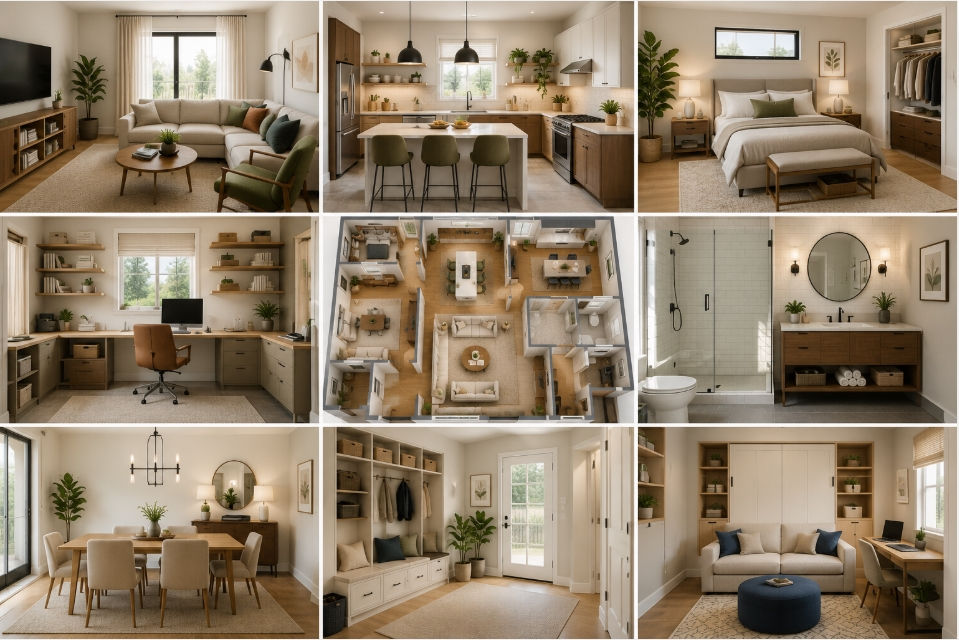
Key recommendations include:
Position seating to encourage conversation.
Maintain clear walking paths.
Use multifunctional furniture.
Avoid blocking windows.
Create designated activity zones.
A sectional sofa may work well in larger rooms, while apartment-sized furniture often provides better flexibility in smaller spaces.
Recommended Living Room Clearances
Area | Recommended Distance |
Between Sofa and Coffee Table | 14–18 inches |
Main Walkways | 30–36 inches |
TV Viewing Distance | 1.5–2.5 times screen size |
Between Chairs | 18–24 inches |
Around Furniture | Minimum 24 inches |
These measurements help maintain comfortable movement throughout the room.
Kitchen Space Planning
The kitchen is one of the most frequently used areas in any home.
Successful kitchen layouts focus on efficiency and workflow.
The classic work triangle connects:
Refrigerator
Sink
Stove
Reducing unnecessary movement between these stations improves functionality and convenience.
Additional kitchen space planning ideas include:
Installing vertical storage.
Using pull-out pantry systems.
Adding island seating when space permits.
Keeping frequently used items accessible.
Maximizing corner cabinet storage.
Bedroom Space Planning
A bedroom should support relaxation while maintaining practical storage solutions.
Many homeowners overcrowd bedrooms with oversized furniture, reducing available floor space.
Better bedroom planning includes:
Selecting furniture proportional to room size.
Using under-bed storage solutions.
Maintaining clear access around the bed.
Installing wall-mounted lighting.
Utilizing vertical closet organization systems.
The goal is to create a calm environment without sacrificing functionality.
Bathroom Space Planning
Bathrooms often have limited square footage, making efficient layouts especially important.
Space-saving solutions include:
Floating vanities
Recessed shelving
Wall-mounted cabinets
Frameless glass shower enclosures
Vertical towel storage
Small changes can dramatically increase both usability and visual openness.
Home Office Space Planning
Remote work has increased demand for dedicated home office spaces.

A productive workspace requires:
Proper desk placement
Adequate lighting
Organized storage
Comfortable seating
Minimal distractions
Even a small corner can become an efficient office with proper planning and furniture selection.
How Professional Space Planners Approach Layout Design
Professional space planners follow a structured process to create functional environments.
Their typical workflow includes:
Step 1: Measuring the Space
Accurate room dimensions form the foundation of every successful layout.
Measurements include:
Wall lengths
Ceiling heights
Door locations
Window placements
Architectural features

Step 2: Understanding Household Needs
Every family uses space differently.
Questions often include:
How many people use the room?
What activities occur there?
Are children involved?
Is storage a priority?
Are accessibility requirements necessary?
Step 3: Creating Functional Zones
Modern homes frequently require multiple functions within one room.
Examples include:
Reading corners
Entertainment areas
Workstations
Play spaces
Dining zones
Step 4: Testing Furniture Arrangements
Space planners often create multiple layout options before selecting the final design.
This process identifies the arrangement that best balances function and aesthetics.
Signs You May Need a Space Planning Service
Many homeowners attempt room layouts independently, but certain situations benefit from professional guidance.
A space planning service may be helpful if:
Rooms consistently feel crowded.
Furniture placement seems awkward.
Renovation plans are underway.
Storage remains insufficient.
Open-concept spaces feel disorganized.
Multiple room functions must coexist.
Professional planning often prevents costly furniture purchases and renovation mistakes.
Room Usage vs. Space Allocation
The following chart demonstrates how homeowners typically allocate space compared to actual room usage patterns.
Room Type | Average Home Space Allocation | Average Daily Usage |
Living Room | 25% | 35% |
Kitchen | 15% | 25% |
Bedroom | 30% | 20% |
Home Office | 5% | 10% |
Dining Room | 10% | 3% |
Storage Areas | 15% | 7% |
Insight: Many homes dedicate substantial square footage to rooms used infrequently, such as formal dining rooms. Reassessing room functions can unlock valuable space for activities that support daily living.
Common Space Planning Mistakes
Using Oversized Furniture
Large furniture can overwhelm a room and restrict movement.
Always measure before purchasing.
Ignoring Traffic Flow
People should move naturally throughout a space without navigating obstacles.
Pushing Everything Against Walls
This common mistake can make rooms feel disconnected rather than spacious.
Lack of Storage Planning
Storage should be incorporated into the layout from the beginning rather than added later.
Poor Lighting Distribution
Lighting affects how spacious and functional a room feels.
Layered lighting generally produces better results than relying on a single fixture.
Smart Space Planning Ideas for Small Homes
Small homes require creative solutions that maximize every inch.
Popular strategies include:

Vertical Storage Systems
Utilize wall space with:
Floating shelves
Tall cabinets
Wall organizers
Multi-Purpose Furniture
Examples include:
Storage ottomans
Murphy beds
Expandable dining tables
Lift-top coffee tables
Open Visual Lines
Reducing visual barriers helps rooms feel larger.
Built-In Storage
Custom built-ins often outperform freestanding furniture in compact spaces.
Flexible Room Design
A guest room can also function as:
Home office
Exercise room
Study area
This approach increases overall home efficiency.
The Long-Term Value of Effective Space Planning
Space planning is not simply about arranging furniture. It is a strategic approach to creating a home that supports everyday living.
Well-planned spaces improve:
Organization
Productivity
Comfort
Safety
Property value
Whether working independently or partnering with experienced space planners, thoughtful planning can transform any room into a more functional and enjoyable environment.
By evaluating how each space is actually used and making intentional layout decisions, homeowners can maximize both the practicality and comfort of their homes for years to come.
FAQs:
What is space planning in interior design?
Space planning is the process of arranging furniture, storage, circulation paths, and activity zones within a room to maximize functionality and comfort. It helps homeowners use available square footage efficiently while improving movement, organization, and overall usability throughout the home.
How do I start planning the layout of a room?
Begin by measuring the room accurately, including doors, windows, and fixed features. Identify the room's primary purpose and list essential furniture items. Create a layout that supports daily activities while maintaining clear pathways and balanced spacing between furniture pieces.
Is a space planning service worth hiring?
A space planning service can provide valuable expertise, especially for renovations, small spaces, open-concept homes, or rooms with multiple functions. Professionals help avoid costly mistakes, improve functionality, and develop layouts tailored to specific household needs and lifestyle requirements.
What are the best space planning ideas for small rooms?
Effective strategies include using multifunctional furniture, maximizing vertical storage, reducing unnecessary furniture, incorporating built-in storage, and maintaining open visual lines. These approaches help create a more spacious feel while improving organization and everyday functionality.
How much space should be left between furniture pieces?
Most designers recommend leaving 14–18 inches between a sofa and coffee table, 30–36 inches for main walkways, and at least 24 inches around larger furniture items. Proper spacing improves comfort, accessibility, and traffic flow throughout the room.


