


Residential Interior Design Ideas for Irvine Homes

Irvine homes have a distinctive advantage: thoughtful architecture, planned neighborhoods, access to open spaces, and a wide range of residential layouts. From contemporary townhomes and family houses to luxury residences and apartments, each property presents different opportunities for better Interior Design.
For homeowners searching for Residential Interior Design Irvine, the goal should be more than making a room look attractive. A successful interior should support everyday routines, use available space efficiently, reflect the homeowner’s personality, and remain comfortable for years.
Irvine is also a city where residential styles vary considerably. The city’s planned development includes single-family residences, townhomes, condominiums, apartments, and newer mixed-use housing. That variety means a good residential interior designer needs to understand the property itself before recommending furniture, finishes, colors, lighting, or layouts.
The Interiorful helps homeowners approach interior design as a complete process, balancing beauty, function, comfort, and personal style.

Why Irvine Homes Need Thoughtful Interior Design
Irvine’s residential environment is shaped by decades of master planning. Its villages were designed around neighborhoods, parks, open space, schools, recreation, and connected community areas. That planning influences how residents use their homes. A living room may need to accommodate family gatherings, remote work, entertaining, and everyday relaxation. A kitchen may need to function as both a cooking area and a social space. Bedrooms may require built-in storage, calming colors, and flexible furniture arrangements.
Local housing values also make thoughtful design a practical consideration. U.S. Census Bureau data places Irvine’s median value of owner-occupied housing units at approximately $1.19 million for 2020–2024, while the owner-occupied housing rate was 44.5%.
Irvine Housing Snapshot
Indicator | Irvine figure | Interior Design Relevance |
2025 population estimate | 318,764 | Diverse household needs |
Households, 2020–2024 | 112,091 | Strong demand for functional residential spaces |
Median owner-occupied home value | $1,191,500 | Quality-focused renovation decisions matter |
Median gross rent | $2,997 | Apartments benefit from efficient space planning |
Average household size | 2.65 people | Flexible layouts can support different lifestyles |
Bachelor's degree or higher | 70.6% | Home offices and multifunctional rooms can be valuable |
Source: U.S. Census Bureau QuickFacts, Irvine city, California.
The insight is straightforward: Irvine interiors should be designed around how people actually live, not simply around a particular decorating style.
7 Residential Interior Design Ideas for Irvine Homes
1. Create an Open and Connected Living Area
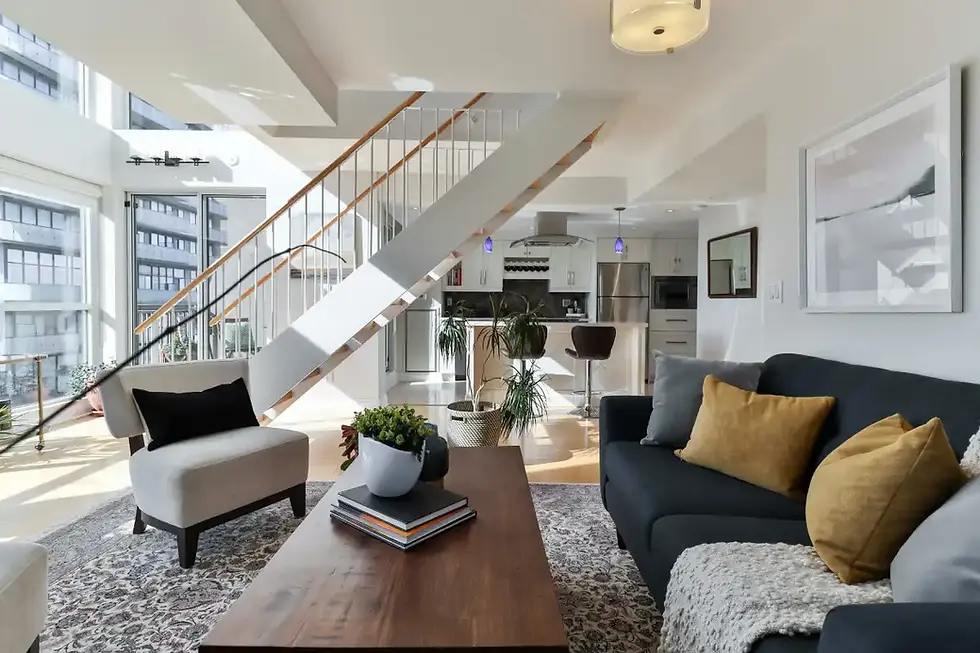
Open-plan interiors remain practical for many Irvine properties because they allow several activities to happen within one connected space. Instead of filling the room with furniture, establish clear zones. A large sectional can define the living area. A dining table can create a separate eating zone, while a kitchen island provides another gathering point.
Use rugs, pendant lighting, furniture orientation, and ceiling fixtures to visually separate each area without creating unnecessary walls. For larger Irvine homes, this approach can make spacious rooms feel intentional rather than empty. For smaller townhomes and apartments, it can make limited square footage feel more generous.
2. Bring California Light Into the Interior
Natural light can have a major impact on the character of an Irvine home. Use window treatments that provide privacy while still allowing daylight to enter. Sheer curtains, woven shades, light-filtering roller shades, and layered window coverings can offer flexibility. Light-colored walls can also help distribute natural light throughout a room.
A useful palette for Irvine residences can include:
Warm white
Soft beige
Light taupe
Sand
Natural oak
Soft gray
Muted green
Warm terracotta accents
The objective is not to make every room white. Instead, create a foundation that allows furniture, artwork, wood, stone, and textiles to provide personality.
3. Use Natural Materials for Warmth
Modern Irvine interiors can sometimes feel too polished if every surface is glossy, smooth, or manufactured. Natural materials introduce warmth.
Consider:
Oak or walnut cabinetry
Stone countertops
Linen upholstery
Wool rugs
Rattan accents
Natural wood furniture
Textured plaster
Handmade ceramics
Stone or wood-look flooring
These materials work particularly well in contemporary, transitional, modern Mediterranean, and California-inspired interiors. A useful rule is to combine three or four different textures in a room rather than relying on color alone.
4. Design a Kitchen That Works for Everyday Life
Kitchen design should balance appearance with daily practicality. For Irvine homeowners, a kitchen island can serve multiple purposes: food preparation, casual dining, homework, socializing, and entertaining.
Consider incorporating:
Deep drawers for cookware
Tall pantry storage
Integrated appliances
Under-cabinet lighting
Durable countertops
Pull-out organizers
A dedicated coffee station
Appliance garages
Comfortable island seating
Kitchen Planning Priorities
Kitchen Feature | Practical Benefit | Best For |
Large island | Food preparation + gathering | Families, entertainers |
Pantry storage | Reduces countertop clutter | Busy households |
Under-cabinet lighting | Better task lighting | All kitchen types |
Drawer storage | Easier access to cookware | Family kitchens |
Integrated appliances | Cleaner visual appearance | Contemporary homes |
Coffee/beverage station | Creates a dedicated routine zone | Couples, families, entertainers |
A residential interior designer can also coordinate cabinetry, lighting, flooring, hardware, countertops, and furniture so the kitchen connects naturally with nearby living areas.
A Simple Irvine Interior Design Style Chart
The best style depends on the architecture, size, natural light, and homeowner preferences. There is no single design approach that fits every Irvine property.
Style Fit Chart — Relative Suitability for Irvine Residential Interiors
California Contemporary   ██████████  10/10
Warm Modern               █████████   9/10
Modern Mediterranean      ████████    8/10
Transitional              ████████    8/10
Minimalist                ███████     7/10
Traditional                ██████      6/10
Industrial                 █████       5/10
Insight: California Contemporary and Warm Modern approaches are especially flexible because they can combine clean architecture with natural textures, comfortable furnishings, and a relaxed Southern California feel. The scores above are design-planning guidance, not market statistics.
5. Make the Home Office Feel Like Part of the House
A home office no longer needs to look like a corporate workspace. For many homeowners, a dedicated office can be integrated into the broader interior design.
Try:
Built-in shelving
A compact wood desk
Comfortable task lighting
Concealed cable management
Closed storage
Acoustic treatments
A statement artwork
A comfortable secondary chair
For smaller apartments or townhomes, a built-in desk can transform an unused hallway, landing, bedroom corner, or dining area into a functional workspace. The key is to avoid letting office equipment dominate the room.
6. Use Bedrooms as Calm, Comfortable Retreats
Bedrooms should have a different visual energy from kitchens and living spaces. A restrained palette can create a calmer environment. Layered bedding, upholstered headboards, textured curtains, soft rugs, and warm bedside lighting can add depth without excessive decoration. For luxury homeowners, consider custom millwork, integrated lighting, built-in nightstands, and carefully selected materials.
For apartment owners, focus on proportion. A smaller bedroom often looks better with fewer, appropriately sized pieces rather than oversized furniture.
7. Make Outdoor Connection Part of the Interior
Southern California living naturally encourages a relationship between indoor and outdoor spaces. If your home has a patio, balcony, courtyard, or backyard, treat it as an extension of the interior.
Use complementary:
Flooring tones
Furniture finishes
Upholstery colors
Lighting temperatures
Decorative materials
Plant selections
Large windows and glass doors can also become design features rather than elements that are simply covered by curtains. This approach is especially effective for homes where the living room opens directly onto an outdoor entertaining area.
Residential Interior Design Ideas by Property Type
Different Irvine properties require different design strategies.
Single-Family Homes
Larger homes offer opportunities for stronger zoning. Instead of decorating every room independently, create a design story throughout the property.
For example:
Entry → Living Room → Kitchen → Dining → Outdoor Area
Use consistent flooring, hardware finishes, wood tones, and accent colors to create visual continuity.
Townhomes
Townhomes often have multiple levels and narrower spaces.
Vertical design becomes important.
Use:
Tall cabinetry
Wall-mounted lighting
Slim furniture
Built-in storage
Mirrors
Consistent flooring
Light wall colors
The goal is to make transitions between levels feel natural rather than visually disconnected.

Apartments and Condominiums
Apartments benefit greatly from multifunctional furniture. A dining area can become a work zone. An entryway can include shoe storage and a compact console. A living room can combine entertainment, relaxation, and occasional guest accommodation.
Property Type | Primary Design Challenge | Recommended Approach |
Single-family home | Large spaces | Zoning + cohesive whole-home design |
Townhome | Vertical and narrow layouts | Built-ins + visual continuity |
Condominium | Limited footprint | Multifunctional furniture |
Apartment | Storage and flexibility | Compact solutions + smart organization |
Luxury residence | Scale and detail | Custom finishes + layered design |
Common Interior Design Mistakes Irvine Homeowners Should Avoid
Choosing Furniture Before Measuring the Room
A beautiful sofa can overwhelm a small living room. Measure the room, doorways, walkways, and furniture clearances before purchasing major pieces.
Using Too Many Design Styles
Mixing styles can create personality, but too many competing directions can make an interior feel disconnected. Choose one primary style and one or two complementary influences.
Ignoring Lighting
A room can have excellent furniture and still feel flat because the lighting is poorly planned.
Use a combination of:
Ambient lighting
Task lighting
Accent lighting
Decorative lighting
Natural light
Forgetting Storage
Storage should be incorporated into the design from the beginning. Built-ins, cabinetry, benches with storage, bedroom wardrobes, and concealed organization can reduce clutter without sacrificing style.
Following Trends Too Closely
Trendy finishes can become dated faster than carefully selected materials. For expensive or permanent elements, choose timeless foundations. Use accessories, artwork, textiles, and smaller furnishings to introduce current trends.
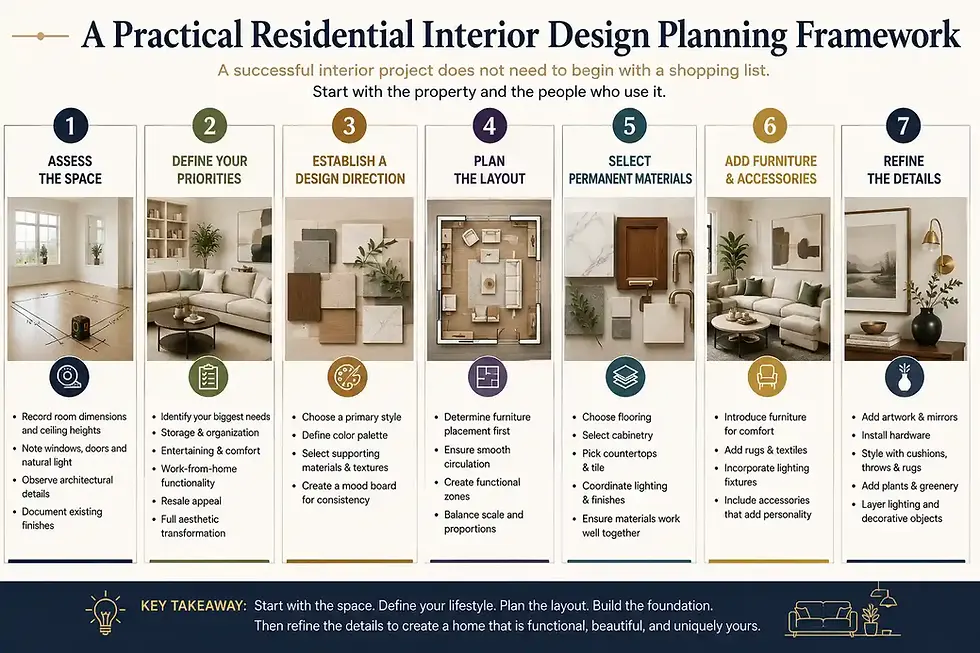
A Practical Residential Interior Design Planning Framework
FAQs
What does residential interior design include?
Residential interior design can include space planning, furniture selection, color palettes, lighting, cabinetry, flooring, materials, window treatments, styling, and decorative details. A complete service may coordinate the visual and functional aspects of multiple rooms so the home feels cohesive rather than decorated piece by piece.
How much does an interior designer cost in Irvine?
Interior design pricing varies based on project size, scope, materials, level of customization, and the designer’s service structure. A single-room consultation will typically require a different investment than a full-home design. Homeowners should request a detailed scope and fee structure before starting a project.
Is hiring a residential interior designer worth it?
For many homeowners, professional design can simplify decisions, improve space planning, coordinate materials, and create a more cohesive result. It can be particularly valuable for large renovations, luxury properties, unusual layouts, or homeowners who want professional guidance from concept through completion.
What interior design style works best for Irvine homes?
There is no single best style for every Irvine property. California Contemporary, Warm Modern, Transitional, and Modern Mediterranean approaches can work well because they accommodate clean architecture, natural materials, comfortable furniture, and bright Southern California interiors. The right choice should reflect both the home and its residents.
How do I choose the right residential interior designer?
Review portfolios, understand the designer’s process, discuss your budget and timeline, and ask how they approach space planning, materials, furniture, and project coordination. Most importantly, choose a residential interior designer who listens to your needs and can translate your lifestyle into a practical, attractive home.
Create an Irvine Home That Feels Personal
Good Residential Interior Design Irvine is not about copying a showroom. It is about creating a home where the layout makes sense, the materials feel appropriate, the lighting supports everyday activities, and each room reflects the people who live there. Irvine’s diverse residential properties create plenty of opportunities for thoughtful design. A family home may benefit from durable finishes and flexible zones. A townhome may need smarter vertical storage. An apartment can gain functionality through multifunctional furniture. A luxury residence can use custom millwork, premium materials, and detailed lighting to create a highly personalized environment.
The Interiorful approaches residential interior design with these practical considerations in mind, helping homeowners bring together functionality, aesthetics, comfort, and personal style.


